


Are online degrees respected? This question has become increasingly relevant as 53% of U.S. students enrolled in at least one online course during the 2022-23 school year, compared to just 35% in the 2018-2019 period. The dramatic growth in online education has transformed the academic landscape, prompting many to question how these credentials are viewed in the professional world.
The good news for online students is that employers increasingly take online degrees seriously. In fact, over 70% of organizations have hired job applicants with online degrees within the past 12 months. Furthermore, 61% of human resource leaders believe online learning equals or surpasses traditional methods in quality, a significant increase from previous years. This growing acceptance suggests that online college degrees are increasingly respected, particularly when they come from accredited online colleges and universities.
What’s driving this shift? Nearly two-thirds of employers now focus on skills-based practices for entry-level hiring rather than educational background. Additionally, an impressive 96% of online program graduates report positive returns on investment regarding employment opportunities. This article examines what employers really think about online degrees in 2026, how to maximize their value, and strategies to overcome lingering misconceptions in the job market.
Are Online Degrees Taken Seriously in 2026?
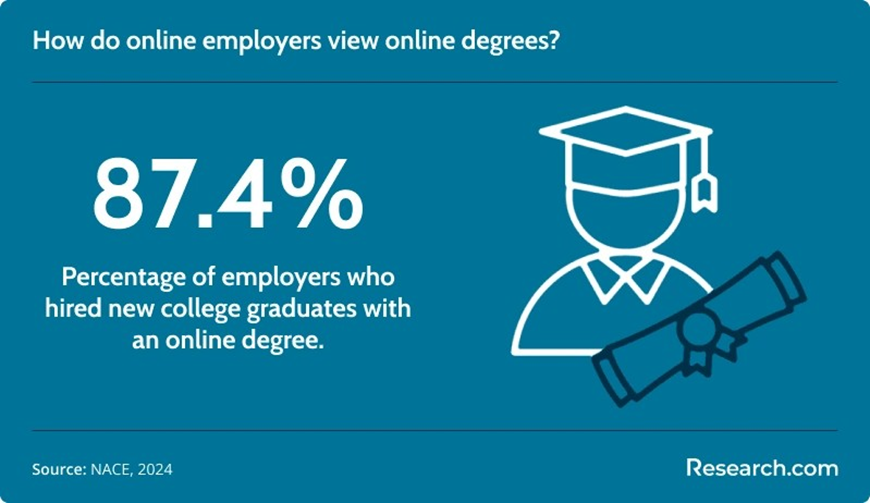
Image Source: Research.com
In 2026, online education has evolved from a convenient alternative to a respected educational pathway. The landscape has shifted dramatically as digital learning platforms have matured and employer perceptions have transformed.
Why online degrees are no longer second-tier
The distinction between online and traditional degrees has significantly blurred over time. Studies show that than those in traditional classroom settings. This performance advantage challenges the outdated notion that virtual education delivers inferior results.students in online classes often perform slightly better
Online degrees now feature rigorous curriculum designs with real-world learning built directly into their structure. Many major public universities have expanded their virtual offerings while maintaining the same academic standards as their on-campus programs. Consequently, the same accomplished faculty who teach in lecture halls also lead online courses, ensuring consistent quality across both formats.
Moreover, the COVID-19 pandemic served as a crucial catalyst, forcing educational institutions to rapidly adopt and improve online learning systems. This global shift highlighted the potential of digital education and led to substantial investments in both technological infrastructure and pedagogical approaches.
What recent employer surveys reveal
Recent studies paint a clear picture of growing acceptance among hiring professionals:
- of online degrees today than before the pandemic84% of adults believe employers are more accepting
- 85% of hiring managers now view online credentials as credible when earned from accredited institutions
- 83% of HR professionals consider accredited online degrees equal to traditional ones
However, geographic variations exist in employer perceptions. The Graduate Management Admission Council (GMAC) found that employers outside the United States, especially in the technology sector, value online and in-person degrees equally. Yet within the US, only 28% of employers strongly agreed or agreed that their companies value graduates of both formats equally.
How online learning has matured
Online education has evolved beyond simple content delivery. What began as basic file sharing and rudimentary quizzes has transformed into interactive, engaging learning environments. The integration of artificial intelligence, virtual reality, and augmented reality has created immersive educational experiences that allow students to explore complex concepts in novel ways.
Furthermore, personalized learning pathways tailored to individual needs have become increasingly common. Adaptive learning algorithms analyze student data to provide customized content, ensuring efficient knowledge acquisition. These technological advancements have significantly improved both the quality and rigor of online education.
As a result, 72% of adults now consider online education more reputable than it was five years ago, while 64% believe an online degree offers equal or greater value compared to campus-based alternatives. This evolution in both perception and reality confirms that online degrees have secured their place as respected credentials in today’s professional landscape.
Key Factors That Influence Employer Respect
Several crucial factors determine whether employers value online degrees. Understanding these elements helps prospective students make informed choices about their educational investments.
1. Accreditation from recognized bodies
Accreditation serves as the cornerstone of online degree credibility. Employers specifically look for degrees from institutions accredited by agencies recognized by the Department of Education or the Council for Higher Education Accreditation. Regional accreditation generally carries more weight than national accreditation, with viewing online degrees from regionally accredited brick-and-mortar schools favorably. Essentially, accreditation verifies that an institution meets established standards of quality and rigor.92% of employers
2. School reputation and alumni success
Institutional reputation dramatically influences how employers perceive online credentials. According to research, 83% of business leaders consider online degrees from “well-known” institutions equal to traditional campus degrees. Notably, believe an institution’s brand and reputation primarily drive a credential’s value, regardless of delivery method. Universities with physical campuses typically gain more employer trust than exclusively online institutions.58% of employers
3. Curriculum relevance to job roles
Program quality and alignment with industry needs significantly impact employer perception. Curricula should:
- Adhere to industry standards
- Include current content and resources
- Feature technologies supporting effective online learning
- Demonstrate application components beyond static content consumption
4. Evidence of applied learning and outcomes
Employers increasingly value demonstrated competency over credential type. Programs featuring practicums, capstone projects, or virtual labs allow students to apply theoretical knowledge to practical situations. Job placement rates and graduation statistics further validate program effectiveness. These metrics help employers evaluate whether graduates can translate their learning into workplace performance.
How to Maximize the Value of Your Online Degree
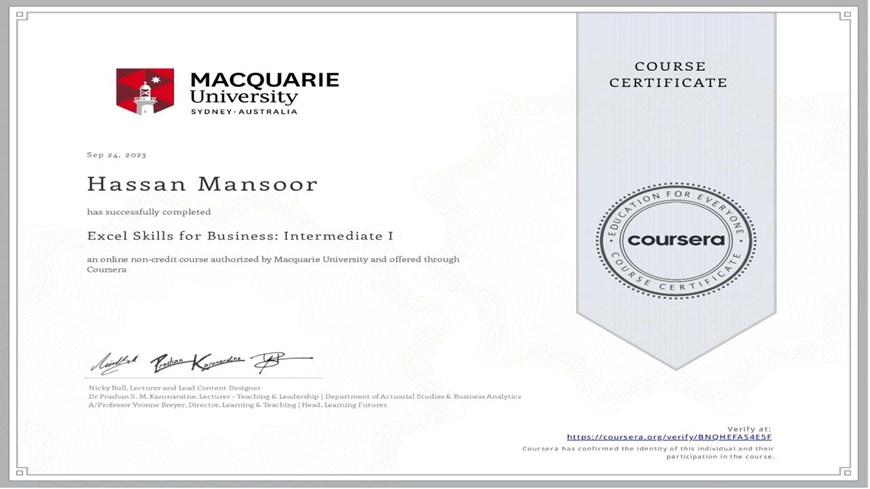
Image Source: LinkedIn
To maximize an online degree’s value in today’s job market, strategic choices throughout your educational journey make all the difference. Smart decisions about institution, credentials, and experiences can significantly enhance your career prospects.
Choose from best online accredited colleges
Selecting the right institution forms the foundation of a respected online degree. Top-ranked online programs like Arizona State University, for online bachelor’s programs by U.S. News & World Report, offer diverse majors across multiple disciplines. Initially, verify regional accreditation status since this affects credit transfers, employability, and financial aid eligibility. Schools like Florida International University bring over 20 years of online education experience, providing access to alumni networks exceeding 200,000 professionals in 33 countries.ranked in the Top 10
Add micro-credentials or stackable certificates
Supplementing your degree with micro-credentials creates a competitive advantage. These competency-based certifications focus on specific skillsets and can be earned in significantly less time than traditional degrees. Furthermore, that micro-credentials strengthen job applications. Consider these stackable options:86% of U.S. employers agree
- Certificate courses that demonstrate specialized knowledge
- Digital badges verifying specific competencies
- Professional development offerings aligned with industry needs
Look for programs with built-in internships
Prioritize online programs offering internship opportunities. Arizona State University’s online students can access both in-person and virtual internships through partnerships with platforms like Handshake, which connects students with employers based on academic background and interests. ASU has also partnered with Virtual Internships to offer a Global Virtual Internship program, giving students work experience with any of 13,000 companies worldwide. Numerous universities allow students to earn academic credit through these experiences, enhancing both credentials and practical skills.
Use platforms like Study.com for credit acceleration
Prior learning assessment can dramatically reduce time-to-degree completion. Some universities recognize work and life experiences, potentially allowing students to earn up to 75% of required credits before formally enrolling. Texas Tech’s USD 10.00K Degree Completion Program even offers free micro-credentials worth up to 21 credit hours. These acceleration strategies make completing your degree faster and more affordable.
Join virtual networking and alumni groups
Building professional connections remains vital despite distance learning. Northeastern University offers numerous virtual networking opportunities connecting peers and professionals within your industry. Actively participate in discussion boards, attend virtual events, and maintain a strong LinkedIn presence. Online student organizations and alumni networks provide mentorship opportunities and career resources. These connections often lead to job referrals—a crucial advantage since many positions are filled through professional relationships.
Common Misconceptions and How to Overcome Them
Despite growing acceptance, misconceptions about online degrees persist in certain professional circles. Understanding and addressing these myths head-on helps online graduates better position themselves in competitive job markets.
Myth: Online degrees are easier
In reality, online education often demands greater discipline and commitment due to the absence of structured classroom environments. Adelaide Fordjour, Academic Operations manager at Ashworth College, notes that online students must “create structure for themselves” instead of relying on traditional campus frameworks. Online programs maintain identical academic standards as their in-person counterparts, with many requiring proctored exams to ensure academic integrity.
Myth: Employers can tell it’s online
Indeed, online degrees are exactly the same as traditional degrees, with the only difference being how classes are taken. While job applicants with online credentials might face additional questions during interviews, these inquiries primarily verify program accreditation. HR professionals increasingly recognize that accredited online degrees deserve equal consideration as campus-based alternatives.
Myth: Online grads lack soft skills
On the contrary, online education develops highly valued workplace competencies. Virtual learning requires self-motivation, time management, and digital fluency—skills that employers actively seek. A Harvard University study found that stems from well-developed soft skills. Online students demonstrate these abilities through collaboration in virtual environments, preparing them for today’s remote and hybrid workplaces.85% of job success
How to counter these myths with proof
To effectively dispel misconceptions, online graduates should:
- Emphasize accreditation status and institution reputation
- Highlight specific projects demonstrating applied learning
- Showcase digital collaboration experiences
- Present online degree confidently without apologizing for format
Smart presentation focuses on outcomes rather than delivery method. Instead of lengthy explanations about online format, briefly mention: “My online program was rigorous and assessment-driven. I completed X projects using Y tools”.
Conclusion
Online degrees have undoubtedly secured their place in the professional world by 2026. Certainly, the statistics speak volumes – with hiring job applicants with online degrees and 61% of HR leaders believing online learning equals or surpasses traditional methods. This shift represents a fundamental change in how employers evaluate educational credentials.70% of organizations
The pandemic accelerated this transformation, pushing educational institutions to improve their digital offerings substantially. Therefore, what once existed as an alternative has evolved into a mainstream educational pathway with rigorous standards and impressive outcomes.
Nevertheless, not all online degrees carry equal weight. Accreditation remains the cornerstone of credibility, with regionally accredited institutions commanding significantly more respect. Additionally, the reputation of the school plays a crucial role, as consider online degrees from well-known institutions equal to traditional campus degrees.83% of business leaders
Students pursuing online education should strategically enhance their credentials. Choosing accredited programs, supplementing degrees with micro-credentials, seeking opportunities with built-in internships, and actively participating in virtual networking can dramatically increase an online degree’s value. These steps help demonstrate both technical knowledge and the soft skills employers seek.
Despite growing acceptance, misconceptions persist. However, evidence shows online programs often demand greater discipline while developing highly valued workplace competencies like self-motivation and digital fluency. Rather than apologizing for the format, graduates should confidently highlight specific projects and accomplishments that demonstrate their capabilities.
Ultimately, the question “Are online degrees respected?” has a clear answer in 2026. They absolutely are – but their value depends significantly on making informed choices throughout your educational journey. The future belongs to those who can combine the flexibility of online learning with strategic decisions about institutions, supplemental credentials, and practical experience. After all, in today’s job market, demonstrated skills and outcomes matter more than how you acquired your education.
Key Takeaways
Online degrees have gained significant employer acceptance, with strategic choices during your educational journey determining their professional value and career impact.
• Employer acceptance is now mainstream: 70% of organizations actively hire candidates with online degrees, and 61% of HR leaders view online education as equal to or better than traditional methods.
• Accreditation and reputation are crucial: Choose regionally accredited institutions with strong brand recognition, as 83% of business leaders consider online degrees from well-known schools equal to campus-based credentials.
• Strategic enhancement maximizes value: Supplement your degree with micro-credentials, seek programs with built-in internships, and actively participate in virtual networking to demonstrate both technical skills and workplace competencies.
• Skills matter more than format: Focus on showcasing specific projects and outcomes rather than defending the online format, as employers increasingly prioritize demonstrated abilities over educational delivery method.
The key to success lies in making informed choices about accredited institutions, supplemental credentials, and practical experiences that translate into measurable workplace value.
FAQs
Q1. Are online degrees respected by employers in 2026? Most employers now recognize and respect online degrees from accredited institutions. Over 70% of organizations have hired candidates with online degrees, and 61% of HR leaders believe online learning equals or surpasses traditional methods in quality.
Q2. What factors influence employer perception of online degrees? Key factors include accreditation from recognized bodies, the reputation of the school, curriculum relevance to job roles, and evidence of applied learning outcomes. Regional accreditation and degrees from well-known institutions tend to be viewed most favorably.
Q3. How can I maximize the value of my online degree? To enhance your online degree’s value, choose from accredited colleges, add micro-credentials or certificates, seek programs with built-in internships, use credit acceleration platforms, and actively participate in virtual networking and alumni groups.
Q4. Do online degrees develop the same skills as traditional degrees? Online education often develops highly valued workplace competencies such as self-motivation, time management, and digital fluency. These skills are increasingly sought after by employers, especially in today’s remote and hybrid work environments.
Q5. How should I present my online degree to potential employers? Focus on outcomes rather than the delivery method. Highlight specific projects, applied learning experiences, and skills gained. Emphasize the program’s accreditation and the institution’s reputation. Confidently present your degree without apologizing for the online format.
